
Actualités
- Details
Julie Coupey a présenté un poster aux 14èmes journées scientifiques du Cancéropôle Nord-Ouest , qui se sont tenus à Deauville du 4 au 6 mai 2022.
"Preclinical study of the effects of proton therapy vs conventional X-rays on circulating leukocytes to obtund radiation-induced lymphopenia in a context of brain tumor irradiation"
Ce poster a obtenu le prix du public.
- Details
Le poster intitulé « Nanosized zeolite for biomedical applications » de Abdallah Amedlous, Charly Helaine, Rémy Guillet, Samuel Valable & Svetlana Mintova
a reçu le prix poster à la 37ème réunion annuelle du Groupe Francais des Zéolithes (GFZ), qui s'est tenu du 29 au 31 mars 2022 à Vogüé en Ardèche.
- Details
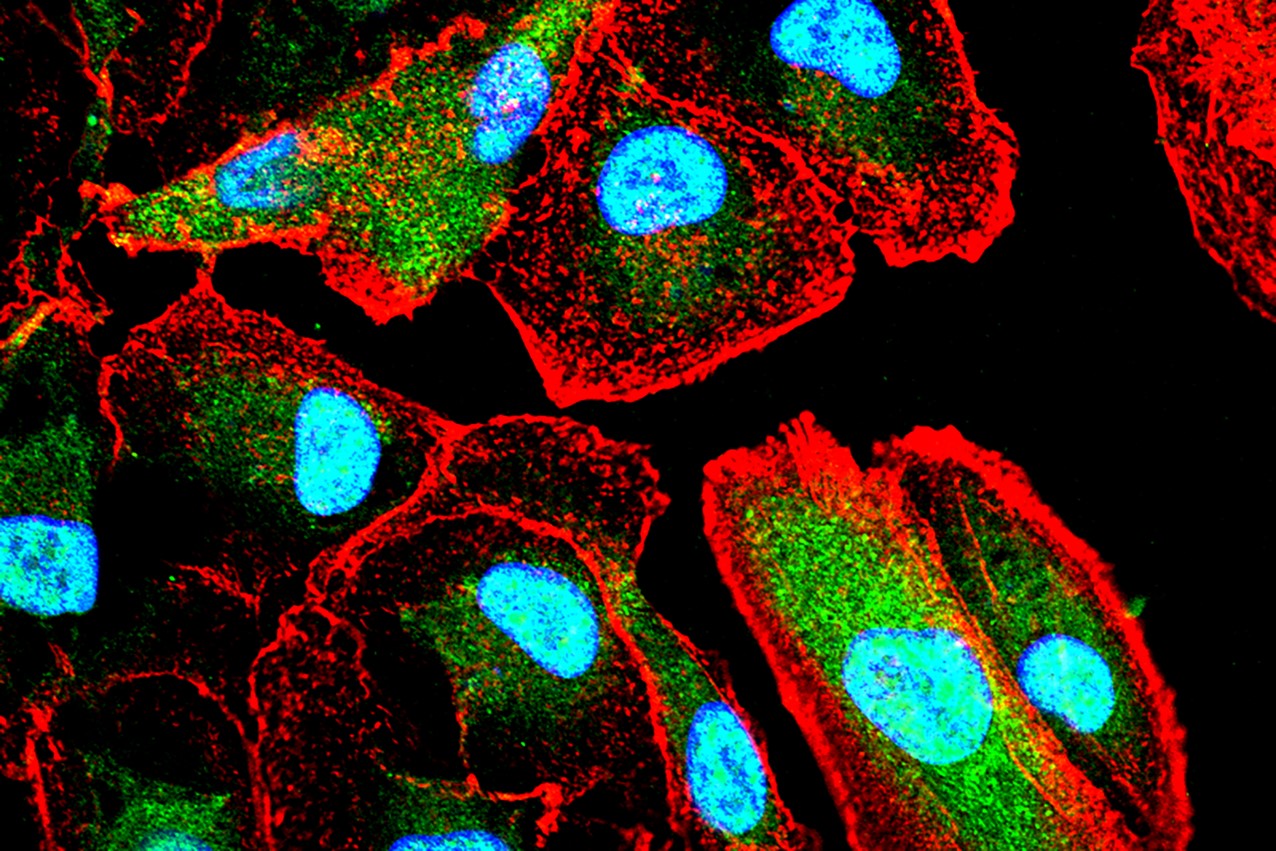
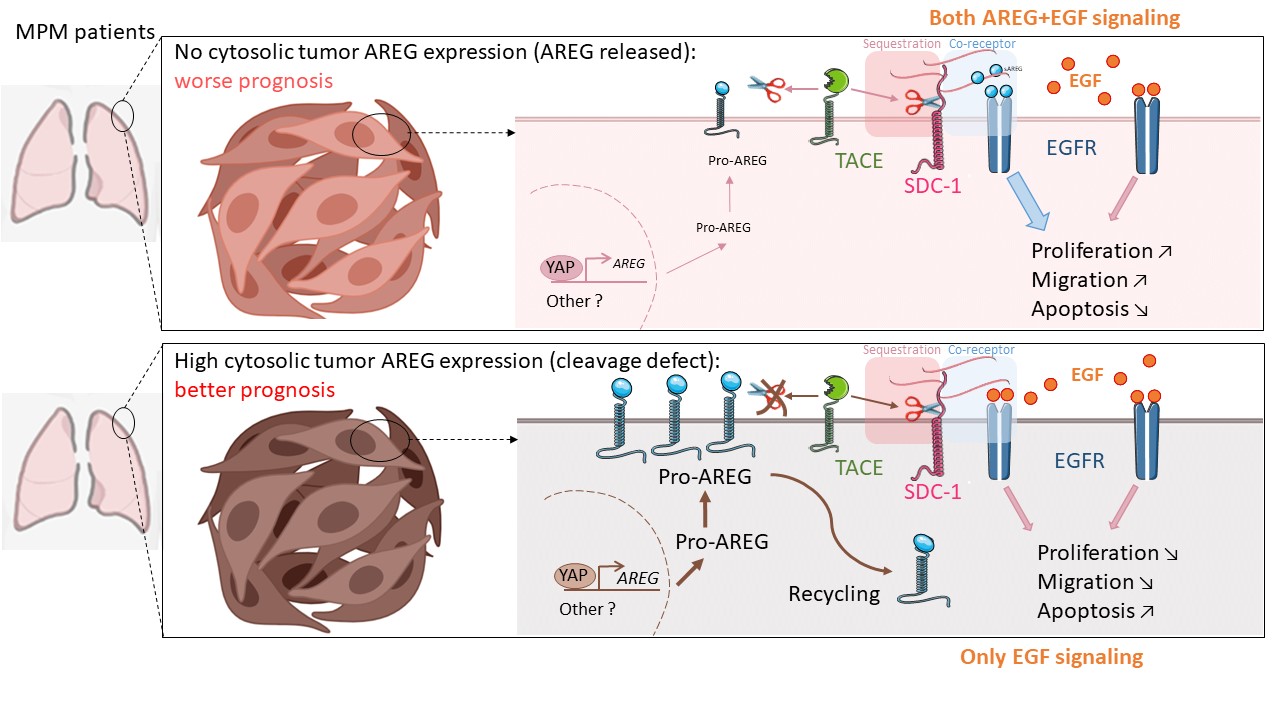
A new article in International Journal of Cancer (IF : 7.39)
Maille Elodie#; Levallet Jérôme#; Dubois Fatéméh; Antoine Martine; Danel Claire; Creveuil Christian; Mazieres Julien; Margery Jacques; Greillier Laurent; Gounant Valérie; Moro-Sibilot Denis; Molinier Olivier; Léna Hervé; Monnet Isabelle; Bergot Emmanuel; Langlais Alexandra; Morin Franck; Scherpereel Arnaud; Zalcman Gérard; Levallet Guenaelle (# contribution égale)
"A Defect of Amphiregulin Release Predicted Longer Survival Independently of YAP Expression in Patients with Pleural Mesothelioma in the IFCT-0701 NotAllowedScript6ac979bd3620fMAPS Phase 3 Trial."
- Details
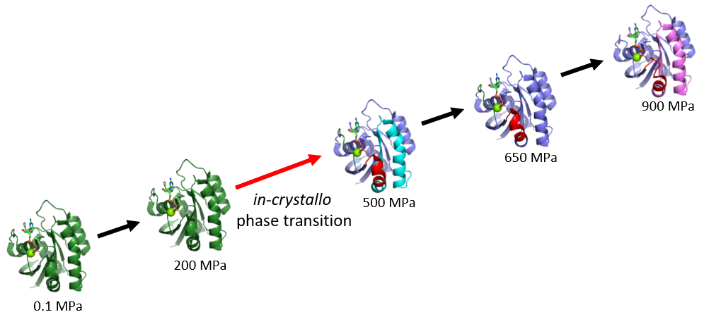
Girard E., Lopes P., Spoerner M., Dhaussy A.C., Prangé T., Kalbitzer H. R., Colloc’h N.
Chemical Science, in press
‘Equilibria between conformational states of the Ras oncogene protein revealed by high pressure crystallography’DOI. https://doi.org/10.1039/D1SC05488K
Using high pressure macromolecular crystallography enable us to characterize with a high precision the excited sub-states of Ras protein involved in many cancers. Pressurizing Ras crystal has induced a phase transition with the crystal. Above the pressure of transition, we have mapped out the different segments of Ras which undergo structural changes, adopting high-energy conformations corresponding to transient intermediate states.
- Details
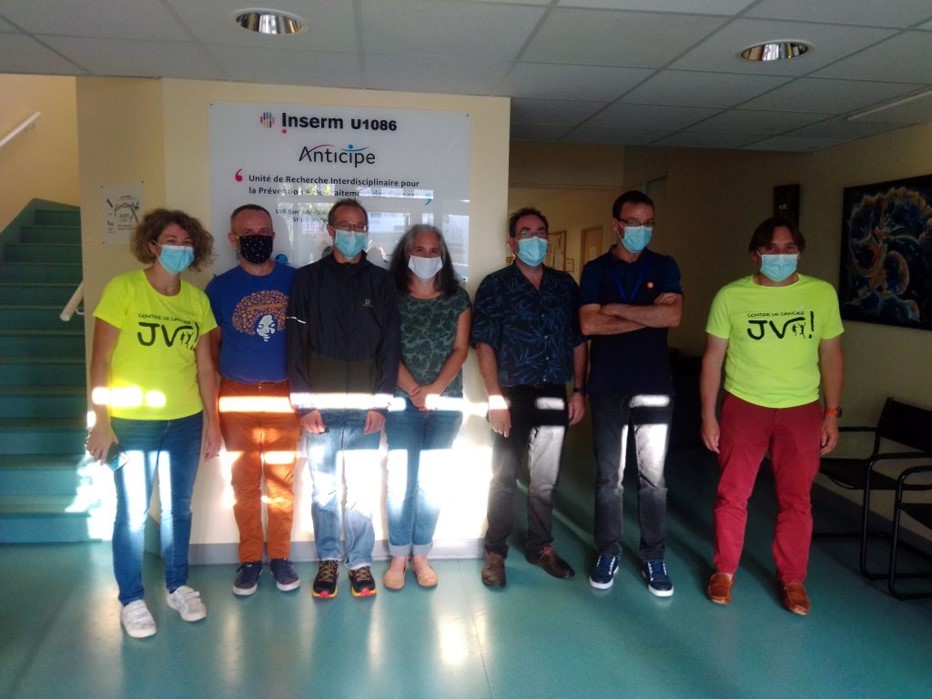
Lors de l’AG de l’association CCJV qui s’est tenue le 11 septembre 2021 dans les locaux de l’unité ANTICIPE, les membres de l’association ont remis un don à l’unité ISTCT (CERVOxy, Caen), mais également à une équipe du GANIL (Caen), une équipe de l’unité ANTICIPE (BIOTICLA, Caen) et une équipe de centre de recherche de Toulouse. Cette AG a permis de présenter des travaux de recherche effectués avec les dons de l'année passée ainsi que les travaux futurs, ce qui est toujours très apprécié des adhérents de CCJV.
 Français (France)
  English (United Kingdom)